Making the most of your receiver Eddystone Stratton VK7AG 0008
Recognised text
Text below was produced by optical character recognition and may contain errors. Check it against the original.
r with the propa-
- daylight in mid-
to produce good
od entertainment
ntacts to be made
es fade out... This

lower frequencies”

ir sun-spot cycle’.
30 Mc/s and even
ine will be noticed

Range |, you will

advice generally
ar of other wires
proper must not
in a high wind—

aerial, which may
It should be well
rough a deck or
sults, particularly
band. But it will
te a short aerial,

< up interference
rranging adequate
be overcome by
» elsewhere. The
al wire, insulators
putting into use
fty feet of feeder
ed feet of feeder,

igth of feeder, it
tion. The longer
> a surplus exists,
it roll and stowed

further insulation

ted in the drawing)
S can occur.

—

is necessary at the point of lead-in. In some cases, it may be advisable to protect
the feeder against friction and a wrapping of insulating tape will serve.

The effect of local electrical interference tends to cancel out in the two
wires forming the feeder, with the result that noise from this source is much
less than it otherwise would be.

SMALL BOATS.

By small boats is meant yachts, trawlers, cabin cruisers and similar sized
vessels.

Again, it is difficult to give advice, since so much depends on individual
circumstances. In the majority of cases, it will only be possible to employ a com-
paratively short length of wire but, because of the open surroundings and free-
dom from serious screening, results will still be good.

»

i ae
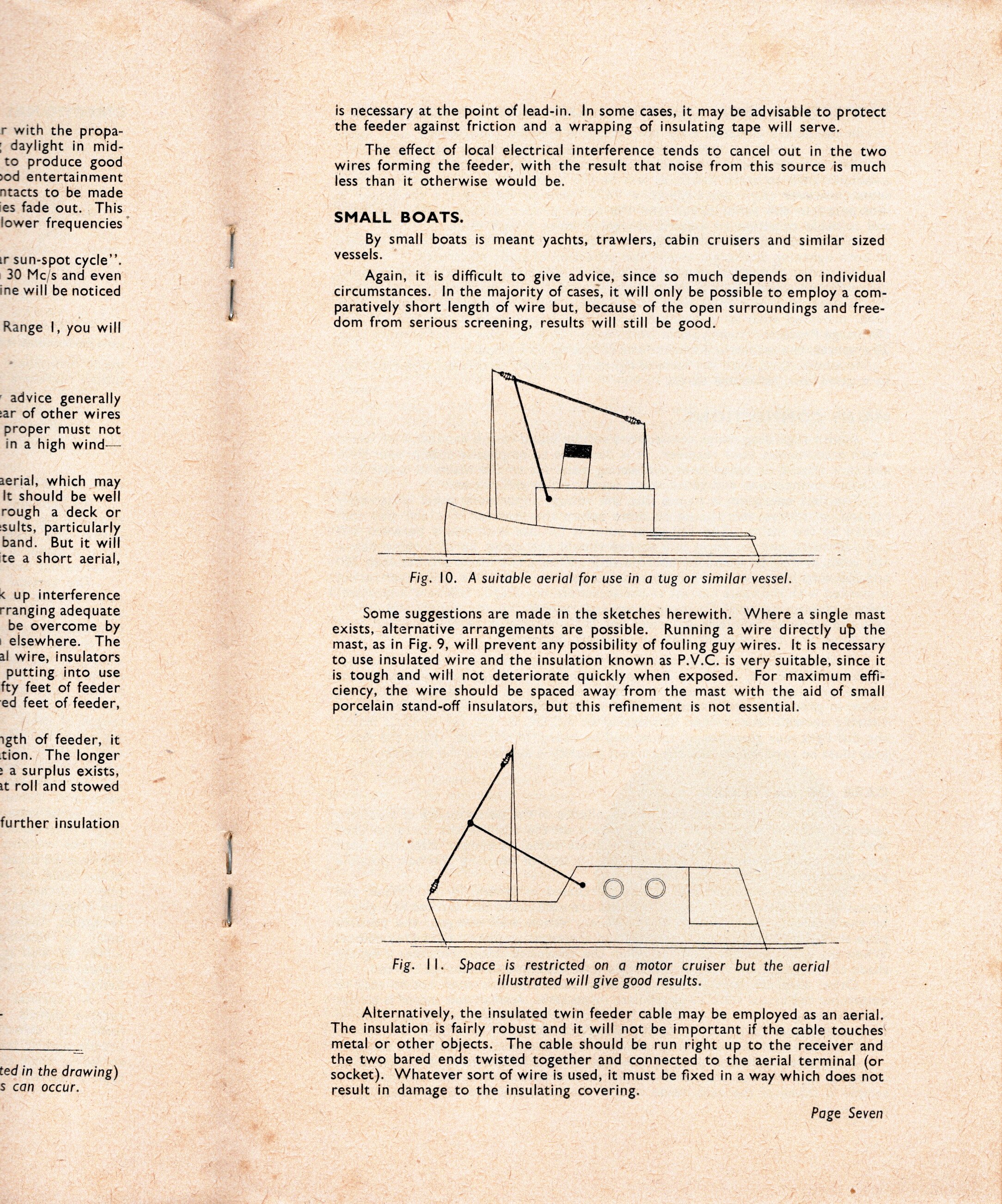
Fig. 10. A suitable aerial for use in a tug or similar vessel.

Some suggestions are made in the sketches herewith. Where a single mast
exists, alternative arrangements are possible. Running a wire directly up the
mast, as in Fig. 9, will prevent any possibility of fouling guy wires. It is necessary
to use insulated wire and the insulation known as P.V.C. is very suitable, since it
is tough and will not deteriorate quickly when exposed. For maximum effi-
ciency, the wire should be spaced away from the mast with the aid of small
porcelain stand-off insulators, but this refinement is not essential.

OO

*

Fig. 11. Space is restricted on a motor cruiser but the aerial
illustrated will give good results.

Alternatively, the insulated twin feeder cable may be employed as an aerial.
The insulation is fairly robust and it will not be important if the cable touches:
metal or other objects. The cable should be run right up to the receiver and
the two bared ends twisted together and connected to the aerial terminal (or
socket). Whatever sort of wire is used, it must be fixed in a way which does not
result in damage to the insulating covering.

Page Seven