Making the most of your receiver Eddystone Stratton VK7AG 0012
Recognised text
Text below was produced by optical character recognition and may contain errors. Check it against the original.
ee ea ie Pee,

RET a SS, ee

oom on

@

latter usually form part of water-heaters, electric blankets and refrigerators—
also give rise to intermittent noises.

Experience is necessary to diagnose the type of electrical equipment produc-
ing noise in wireless receivers, and often considerable patience is necessary
when tracking it down. Listeners in the United Kingdom, whether they use
communications or broadcast receivers, should obtain the appropriate form
from the Post Office and send in details, when the matter will receive the attention
of the Post Office engineers, who have been trained in the location and prevention
of interference, and who are properly equipped to carry out the work.

It is probable that the same procedure is available to overseas listeners—in
any case, it is worth while making enquiries. before tackling the work oneself.

The general advice which follows is provided mainly for the benefit of those
using short wave broadcast receivers on board ship, but it is also applicable to
others. It is necessary to emphasise two points—great care should be taken
when carrying out tests, since even 110 volt mains can cause a nasty shock under
some conditions, and secondly, only very reliable components should be used
for reducing or preventing the interference.

It should be noted that any electrical noise heard may be emanating from
a comparatively weak near-by source, or from a machine at a distance but pro-
ducing severe interference. Further, the sensitivity of the receiver comes into
the picture. Maybe noise is weak or inaudible on a domestic type of receiver,
but becomes serious on a set possessing high sensitivity, as is the case with Eddy-
stone receivers, particularly communications models.

Another point to bear in mind is that the interference created by a machine
is likely to vary over the frequency range used for radio communication and
although, after fitting a suppressor, the interference disappears over one par-
ticular range on a receiver, it may appear again at other frequencies. It may
happen that some equipment in use has already been fitted with suppressors
by the manufacturers—for instance, a rotary converter, as frequently employed
for transforming D.C. to A.C. or vice versa—but often such suppressors are
designed for cutting out interference on medium frequencies (that is, the medium
wave broadcast band) and they may not be fully effective at the high frequencies
used for long distance short wave broadcast transmissions.

There are two ways of tackling the problem: (a) to endeavour to eliminate
the interference at the source, and (b) to prevent it entering the radio receiver.
It is more satisfactory, and, in the long run, more economical, to suppress the
interference at the source, since, ina bad case, the noise may be affecting recep-
tion over a comparatively wide area. On board ship, efforts to cure the trouble
at the source will probably
meet with considerable sup-
port, since both the ship’s
communications installation
and receivers used for
broadcast reception will
benefit.

When the offending
machine or apparatus has
been located, the first thing
to do is to check its condi-
tion. All connections should
be examined for tightness
and, where a metal frame
exists, atest should be made
to ensure that it is properly
earthed. Quite likely the
equipment has been in use

for a long time, and renova- \ ONDENSER CONNECTED
: :
tion may be required. Ifa ACROSS TERMINALS.

motor, perhaps the brushes
are badly worn or the
commutator may be rough,
causing severe sparking and

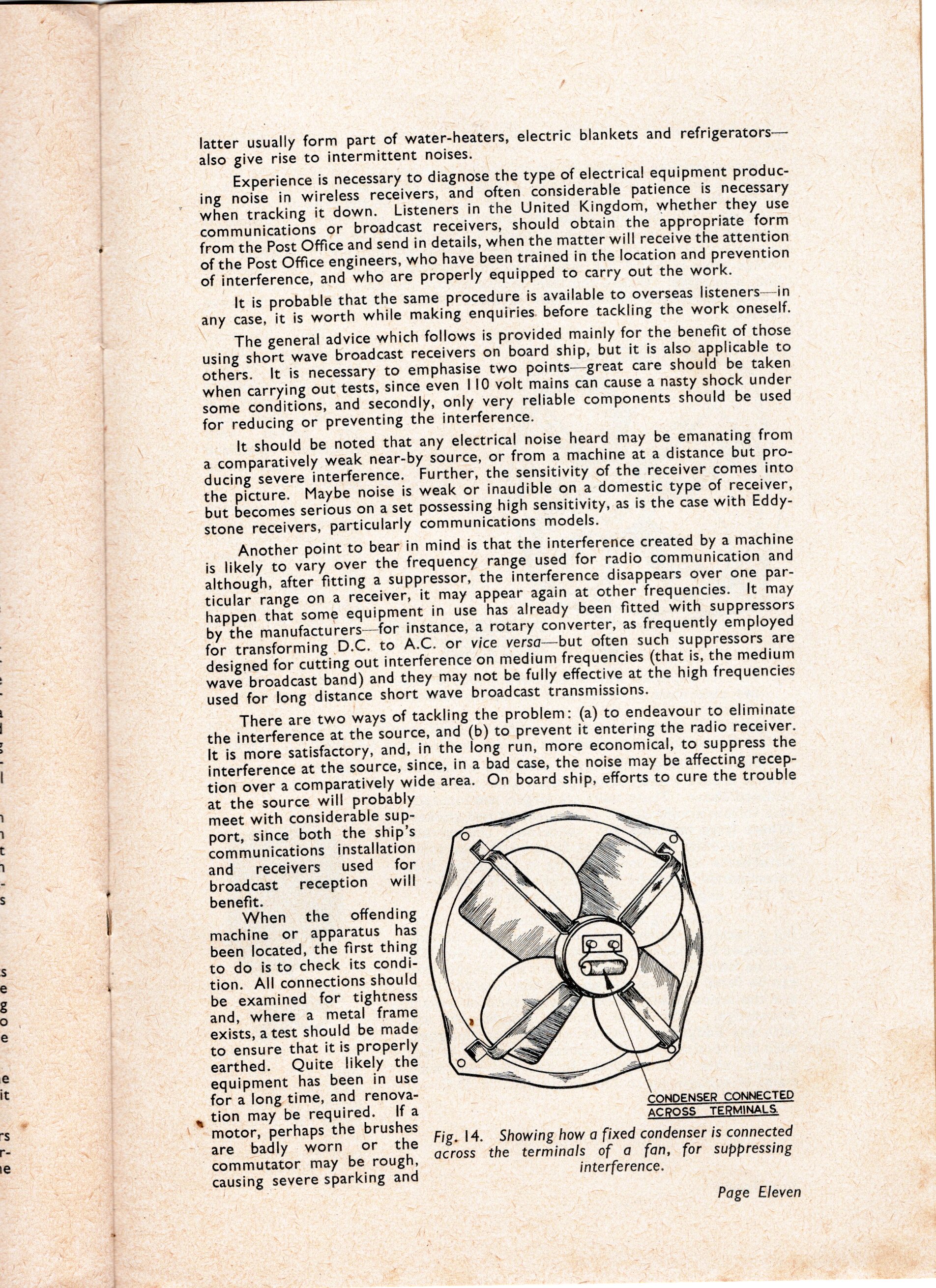
Fig. 14. Showing how a fixed condenser is connected
across the terminals of a fan, for suppressing
interference.

Page Eleven